Two shut-off valves, two principles

Ball valves and gate valves are both valves that are designed to shut off or open pipes. Nevertheless, they differ fundamentally in terms of function, operation, maintenance requirements and typical fields of application. If you want to make the right choice, you need to understand both principles and know when each system comes into its own.

How a ball valve works

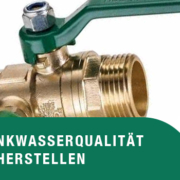
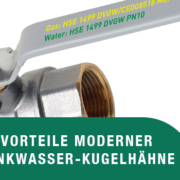
The ball valve has a drilled ball in the housing. If the handle is turned by 90 degrees, the hole is aligned with the pipe cross-section and the medium can pass through unhindered. In the closed position, the ball rotates so that the hole is at right angles to the direction of flow and completely blocks the medium. The principle is simple, robust and quick to operate. When open, a ball valve offers minimal flow resistance as the full pipe cross-section is released.

HSE ball valves are available for drinking water, heating and gas and, with the UNIDUO, for both applications simultaneously. All models are available with different handle variants and connection designs.

How a gate valve works

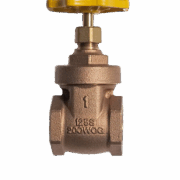
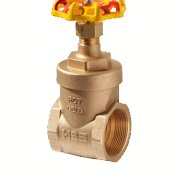
With a gate valve, a gate plate is pushed into or pulled out of the pipe by turning a spindle perpendicular to the direction of flow. Complete opening requires several turns. When fully open, the plate lies in the housing and releases the pipe cross-section, which also enables very low pressure loss.

However, the gate valve is not a fast-acting component. It is suitable for situations in which the valve is rarely opened or closed and in which slower actuation is more of an advantage because pressure surges in the line should be avoided.

Get more information now.

Where the ball valve has its strengths

Today, the ball valve is the dominant shut-off valve in building services, heating systems, drinking water installations and gas systems. It is compact, quick to operate, leak-proof and low-maintenance. The position indicator is clear: handle parallel to the pipe means open, handle across means closed. This reduces confusion during maintenance work.

Ball valves are particularly suitable when valves are operated frequently, when quick shut-off is required in the event of a malfunction and when little installation space is available. They also require less maintenance than gate valves because regular lubrication of the spindle is not necessary.

Where the slider has its justification

Today, gate valves are mainly used in public water supply systems, in larger nominal diameters and in industrial plants where the slower actuation is used specifically to avoid pressure surges. Gate valves have become less common in domestic installations, but for certain special situations, such as very large pipe diameters or in piping systems with special flow requirements, they may be the better choice.

Practical decision-making aid

The decision between ball valve and gate valve can be based on three criteria: How often is the valve operated? How quickly must the valve be shut off? And what nominal size is required? In domestic installations up to a nominal diameter of DN 50, the ball valve is the better choice in almost all cases. All available series and technical details can be found in the data sheets in the download area.

Conclusion: ball valve or gate valve

Today, the ball valve is the clear first choice for building services. It is compact, fast, tight and easy to maintain. Gate valves are justified in larger nominal sizes and in the supply infrastructure, where other operating conditions apply. HSE Armaturen offers a complete range of ball valves for domestic installations for drinking water, heating and gas.

If you have any questions about choosing the right fitting for your application, please contact us. Contact us now.
Lead in drinking water: an issue with a long history and a clear direction

The gradual reduction of lead in drinking water installations is not a new topic, but it has gained significant momentum in recent years due to legal changes. Lead pipes have been completely banned in Germany since January 2026. What at first glance appears to be purely a piping issue also affects taps, fittings and connecting elements that come into contact with drinking water.

What the Drinking Water Ordinance means in concrete terms

The amended Drinking Water Ordinance transposes the EU Drinking Water Directive into German law. The lead limit in drinking water has already been lowered to 0.01 mg per liter and will be halved again to 0.005 mg per liter from January 2028. This is a limit value that can hardly be met with lead-containing installation components.

At the same time, the European Chemicals Agency is working on an EU positive list for materials that come into contact with water, which is expected to come into force at the end of 2026. This list specifies which materials may be used in drinking water systems. For alloys such as brass and bronze, a maximum lead content of 0.1 percent by mass applies as a limit value for new products.

Get more information now.

Lead-free brass: what is changing technically

Classic brass traditionally contains lead as a machining additive, which facilitates machining. In lead-free alloys, lead is replaced by other elements such as bismuth or silicon, which offer similar machining properties but without the health risks. This changeover is technically complex and requires adapted production processes and new quality tests.

The material CW 617 N, which HSE uses in its drinking water ball valves, is approved for use in domestic water systems in accordance with the applicable regulations. Information on the current material basis can be found in the data sheets and technical documents as well as directly from our team.

Classification for trade and crafts

For specialist wholesalers and the HVAC trade, these developments mean that stocks should be checked for the material specifications of the valves and fittings used. For new installations, only products that meet the current requirements and are documented accordingly should be used.

In sales talks, it is helpful to inform the customer factually about the legal situation: Existing installations from the time before the new limit values do not have to be replaced immediately, as long as the measured values are complied with. However, the current requirements apply to renovations and new installations, and compliant products should be used from the outset.

What this means for product selection

The requirements for lead-free fittings will continue to increase. If you choose products today that already meet the stricter limits or have switched to lead-free alloys, you are well positioned for the future. HSE Armaturen is available to answer questions about the material basis and product-specific approvals.

HSE’s drinking water ball valves are DVGW-certified and meet the applicable requirements for use in drinking water systems.

Conclusion: Lead-free brass fittings in drinking water systems

The legal requirements for drinking water fittings are becoming stricter, and this trend cannot be reversed. Retailers and tradespeople are well advised to address the material requirements for their products at an early stage and to rely on compliant fittings. HSE Armaturen supports you with technical advice and certified products.

If you have specific questions about material approvals or products, please contact us. Contact us now.
Brass as a material for fittings: strengths and limitations

Brass has proven itself in fittings technology for decades. It is corrosion-resistant, easy to machine, pressure-resistant and can be cleanly connected with threaded and press fittings. Nevertheless, not every brass fitting is suitable for every application. The most important differences arise from the requirements of the respective medium, the operating pressure and the applicable standards and approvals.

Brass fittings for drinking water

In the drinking water sector, hygienic requirements apply that go beyond mere tightness and pressure resistance. Valves must be made of materials that do not release any harmful substances into the water. The brass CW 617 N that HSE uses for its drinking water ball valves is approved for use in drinking water systems in accordance with the applicable regulations.

In addition, drinking water taps must be designed in such a way that there are no dead spaces in which water can collect untouched and Legionella bacteria can form. The HSE Uniwater ball valves are dead space optimized and DVGW-certified, which fulfils this requirement in a documented manner.

Brass fittings for gas

Gas has different requirements than water. Tightness must be absolutely guaranteed over long periods of time, as even the smallest leaks pose a safety risk. Gas fittings must be manufactured and tested in accordance with DIN-EN 331 and bear the corresponding marking. The brass used must be resistant to the gas in question, i.e. natural gas, liquid gas or other gas families.

HSE gas ball valves are made of brass CW 617 N and carry the pressure rating MOP 5. The UNIDUO offers a practical solution for applications in which gas and water occur together in a system: it is one of the few ball valves with double DVGW approval for both media.

Get more information now.

Brass fittings for heating systems

In heating systems, the hygiene requirements are less stringent than in the drinking water sector, but temperature and pressure resistance play a greater role. Heating valves must be able to withstand operating temperatures of up to 90 degrees Celsius and the usual system pressures over the long term. MS 58, the brass used for HSE heating ball valves, is suitable for these conditions and also offers good mechanical properties for frequently operated valves.

The HSE heating ball valves are available in various pressure ratings and handle variants and are suitable for threaded, screw, solder and press connections.

Brass fittings in the industrial sector

In the industrial sector, the requirements vary greatly depending on the medium, pressure and temperature. Fittings can be confronted with aggressive media, high pressures or special safety requirements. Brass is suitable for many, but not all industrial applications. The decisive factor is whether the brass used is resistant to the medium in question. Other materials may be required for aggressive acids, certain solvents or very high temperatures.

Brass valves are a proven and economical choice for standard industrial applications, such as compressed air, neutral liquids or steam in the low temperature range. Technical data for the individual series can be found in the data sheets in the download area.

Conclusion: Brass fittings for water, gas and industry

Brass fittings are versatile, but not universal. If you know the area of application, the medium and the applicable standards, you will make the right choice. HSE Armaturen offers a coordinated range for drinking water, gas and heating with clear approvals and a reliable technical basis.

If you have any questions about the right fitting for your application, please do not hesitate to contact us. Contact us now.

Gas and fittings: why the choice allows no compromises

A clear principle applies to gas installations: only use fittings that are expressly approved for gas. If you use a fitting that is only approved for water or heating, in the best case you risk failing to pass approval by the network operator, and in the worst case you risk a safety-critical installation. The differences between gas and other fittings are not always apparent at first glance, but they are technically significant.

What distinguishes a gas fitting from other fittings

Gas ball valves must be manufactured and tested in accordance with DIN-EN 331. This standard specifies the requirements for shut-off valves for gas installations in buildings, including tightness, pressure resistance, actuating force and long-term properties. Valves that comply with this standard are marked accordingly.

HSE gas ball valves are made of brass CW 617 N and have the pressure rating MOP 5. MOP stands for Maximum Operating Pressure and indicates the maximum operating pressure that the valve can withstand permanently. MOP 5 is the usual requirement for domestic installations in the low-pressure range.

Get more information now.

The UNIDUO: a fitting for water and gas

The UNIDUO ball valve occupies a special position in the HSE range. It is one of the few ball valves on the market to have double DVGW approval for both water and gas. It is available in nominal sizes DN 8 to DN 50, has pressure ratings of PN 42/35 for water and MOP 5 for gas and can also withstand thermal loads of up to 650 degrees Celsius for gas (HTB 0.1). This makes it a flexible solution in installation situations where both media occur in close proximity.

Labeling and recognizability in practice

An approved gas fitting bears the corresponding marking on the housing or handle, including the standard reference DIN-EN 331 and the pressure rating. Anyone in doubt as to whether an existing fitting is suitable for gas should check the type plate or ask the manufacturer. As part of maintenance and renovation work, it also makes sense to proactively replace older fittings without clear identification.

Model overviews and data sheets for the HSE gas ball valves are available in the download area. There you will also find the technical drawings and application notes for the individual series.

Typical misunderstandings in practice

A common misconception is that a ball valve that looks identical to a gas model can also be used for gas. This is not the case. The decisive factor is the documented approval, not the appearance. It should also be noted that valves for liquid gas (LPG) sometimes have to meet different requirements than those for natural gas. If in doubt, always check with the network operator or the responsible specialist company which requirements apply in the specific case.

Conclusion: Gas fittings for practical use

There are no compromises when choosing fittings for gas installations. Only fittings manufactured in accordance with DIN-EN 331 and marked accordingly may be used. With its gas ball valves and the UNIDUO, HSE offers reliable solutions that meet the normative requirements and are designed for use in building services.

If you have any questions about the right gas fitting for your application, we will be happy to help you. Contact us now.

Why drinking water ball valves must meet special requirements

A ball valve is not just a ball valve. Anyone using a fitting in the drinking water sector must ensure that it is approved for this use, meets hygiene requirements and remains leak-proof in the long term. Valves that do not meet these requirements can impair drinking water quality and cause problems when they are approved by a specialist company.

HSE drinking water ball valves from the Uniwater series are DVGW-certified under the registration number NW-6102AT2438, have noise class I and are designed with optimized dead space to prevent the formation of legionella in stagnant water areas. The CW 617 N material used is approved for use in drinking water systems.

Handle variants: Which version fits where

HSE drinking water ball valves are available in three different handle versions. The choice of the right handle design depends on the installation location and accessibility. In confined shafts or behind cladding, a narrow flat handle that requires little space makes sense. In easily accessible areas, a lever handle offers better handling during operation.

Regardless of the handle variant, the position indicator is important: a correctly labeled or colour-coded handle shows at a glance whether the fitting is open or closed. This is a clear advantage, especially during maintenance work and in emergency situations.

Get more information now.

Connection types and installation situations

Drinking water ball valves are available in various connection designs. The classic version with external thread can be connected with standard fittings. HSE Uniwater system ball valves with male threads on both sides make it easier to comply with the installation regulations of DVGW worksheet W 570. They can be connected with all half screw connections of commercially available press connections and can therefore be replaced without changing the pipe routing.

For systems with Viega Profipress, all ball valves are also available complete with the corresponding screw connection. This simplifies installation considerably and reduces the time required on site.

Emptying as a practical additional function

Models with integrated draining are particularly useful if individual pipe sections need to be drained regularly, for example during maintenance work or when outside pipes are not used in winter. If you choose the version with drainage, you do not need an additional KFE tap for the system, which saves costs and installation work.

All available models, dimensions and technical specifications can be found in the product overview of drinking water ball valves and in the data sheets in the download area.

Practical selection guide for use

Three questions help when choosing the right drinking water ball valve: What nominal diameter is required? What type of connection is available on site? And how easily accessible is the installation location? With these three details, the series can be narrowed down quickly. For unclear installation situations or special cases, the HSE team is available for technical queries.

Conclusion: Using drinking water ball valves correctly

Drinking water ball valves are not mass-produced goods, but technically defined products with clear approval requirements. Those who rely on certified valves such as the HSE Uniwater series are on the safe side, both during approval and in continuous operation. The handle variant, connection type and draining option can be flexibly adapted to the respective situation.

If you need assistance with your selection, we will be happy to help you. Contact us now.

Why the right shut-off valve in the heating system is crucial

Shut-off valves play a central role in heating systems: they enable the targeted interruption of individual heating circuits, the shut-off of devices for maintenance and the safe separation of system components in the event of a fault. If you make a hasty decision when selecting a valve, you risk leaky connections, limited maintainability or a valve that is simply not suitable for the media and pressures that occur.

Areas of application in the heating circuit

Shut-off valves are required at several points in heating systems: at the flow and return connections of radiators and heating circuit manifolds, at pumps, heat exchangers and boilers as well as at draining and filling points. Depending on the installation position, there may be different requirements in terms of pressure rating, temperature resistance and operability.

Ball valves are the dominant shut-off valve in the heating sector today. They can be fully opened or closed with a quarter turn, offer minimal flow resistance when open and remain tight over many operating cycles. HSE ball valves made of brass MS 58 are available in various pressure ratings and handle variants and are designed for a wide range of applications in heating and industrial systems.

Material and media compatibility

Brass has proven itself as a material for heating systems. It is corrosion-resistant to the heating water, mechanically resilient and can be machined cleanly. HSE heating ball valves are made of MS 58, a brass alloy with high strength and good machinability. The PTFE seals on the ball and spindle ensure permanently tight connections and can be retightened if necessary.

The temperature and pressure of the system should always be known when selecting the fitting. Typical heating systems work with flow temperatures of up to 90 degrees Celsius and operating pressures of up to 6 bar. Make sure that the selected fitting is approved for the actual operating range.

Get more information now.

Handle variants and operability

Heating ball valves are available in different handle designs: flat handle, T-handle and lever handle are the most common variants. The flat handle is suitable for cramped installation situations, while the lever handle offers good handling for heavy-duty operation and occasional actuation. For systems that require regular maintenance, fittings with good grip comfort and a clear position indicator are preferable.

The heating and gas ball valves from HSE are available in several handle variants and cover different installation situations. Technical details and data sheets can be found in the download area.

Avoid typical selection errors

A common mistake is confusing heating and drinking water fittings. The same fittings must not be used for heating systems as for drinking water, even if they look similar on the outside. Drinking water fittings are subject to different hygiene requirements and approvals. Anyone who does not observe this limit risks problems during acceptance and operation.

Another mistake is to underestimate the pressure rating. Particularly in older systems with high system pressure, the nominal pressure rating of the valve should be well above the maximum operating pressure to ensure safety reserves.

Conclusion: Select shut-off valves in heating systems correctly

The choice of the right shut-off valve for heating systems depends on the installation location, medium, temperature, pressure and operability. Brass ball valves have established themselves as a reliable standard solution in the heating sector. HSE Armaturen offers a coordinated range with a robust technical basis for these requirements.

If you have any questions about choosing the right fitting, please contact us. Contact us now.